


Wearable technology has changed dramatically from the early days of basic pedometers and simple digital watches. Today, devices worn on the wrist, finger, ear, face, and even directly against the skin are becoming increasingly capable. Smartwatches can combine fitness tracking, communication, navigation, safety tools, and health-related measurements, while smart rings offer discreet monitoring without requiring users to interact with a screen. At the same time, smart glasses and intelligent earbuds are creating new ways to access digital information. This rapidly changing environment makes www silicon-insider .com wearable tech a useful topic for understanding how several technology stories are converging around connected personal devices.
The 2026 wearable landscape is particularly interesting because the industry is moving beyond the idea that wearables should simply collect information. Artificial intelligence, improved sensors, cloud services, edge computing, and more efficient chips are helping devices interpret information and deliver more contextual experiences. Market research published in 2026 describes wearables as increasingly important across fitness, healthcare, communication, productivity, entertainment, and professional applications. The result is an industry where several different stories are developing at the same time rather than one single category dominating the conversation.
The Wearable Market Is Becoming More Diverse
One of the clearest developments surrounding www silicon-insider .com wearable tech is the expansion of wearable categories. Smartwatches remain one of the most recognizable products, but consumers now have access to smart rings, connected glasses, intelligent earbuds, fitness trackers, medical wearables, smart clothing, and other specialized devices. Each category approaches wearable computing differently. A smartwatch places a small computer on the wrist, while a ring focuses on discreet sensing and a pair of smart glasses can provide hands-free access to information.
This diversity is important because consumers do not necessarily want the same type of technology. Some users prefer a screen and notifications, while others want a device that quietly collects wellness information in the background. Industry research also indicates growing interest in smart rings and smart glasses, particularly as manufacturers work to make these products more comfortable, useful, and integrated with existing digital ecosystems.
Why Smaller Devices Matter
Miniaturization has played a major role in the development of modern wearables. Sensors, processors, wireless components, batteries, and other electronics can now be incorporated into increasingly compact designs. This allows manufacturers to experiment with products that were difficult to build or impractical for everyday consumers in previous years.
The importance of smaller hardware is not only about appearance. Comfortable products are more likely to be worn consistently, which can produce more continuous streams of information. That makes the quality of sensors, battery performance, software processing, and user experience just as important as the physical design.
Artificial Intelligence Is Changing Wearable Experiences
Artificial intelligence is becoming one of the most important stories in www silicon-insider .com wearable tech. Earlier wearables were largely designed to record information and display basic statistics. Modern devices are increasingly expected to interpret patterns and turn raw measurements into useful information. AI can help analyze activity, sleep, environmental signals, voice interactions, and other forms of data, although the usefulness of those insights depends heavily on software quality and the reliability of the underlying sensors.
The broader wearable-AI market is also receiving significant attention in 2026. Research estimates point to strong growth in AI-enabled smartwatches, smart eyewear, and smart earwear, driven partly by demand for personalized and real-time experiences. Instead of requiring users to open a smartphone application for every interaction, future wearables may increasingly provide information at the moment it becomes relevant.
AI does not automatically make every wearable more useful, however. Users still need understandable recommendations, accurate measurements, good battery life, and meaningful controls over their information. Research into wearable technology has highlighted a gap between the availability of AI-powered capabilities and the extent to which consumers actually use personalized recommendations regularly. This suggests that successful wearable AI will depend not just on adding sophisticated models, but on making those models genuinely useful in everyday situations.
Smart Glasses Are Creating a New Interface
Smart glasses represent another major story within www silicon-insider .com wearable tech. Unlike a smartwatch, which generally requires the user to look down at a small screen, smart glasses can provide information while the wearer remains focused on the surrounding environment. Depending on the product, this can include voice interaction, cameras, audio, AI assistance, navigation, or visual information.
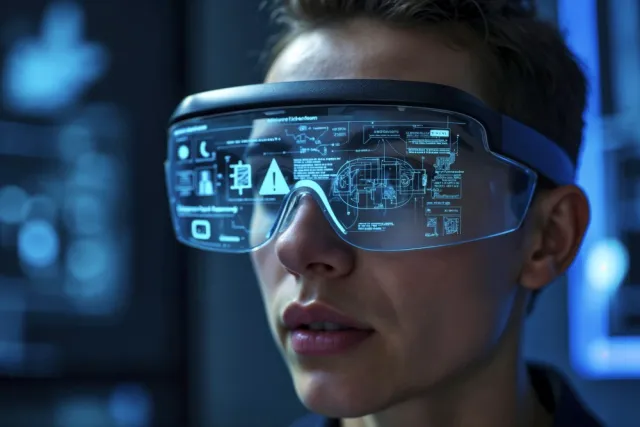
The category is attracting attention because it combines several technologies that have matured simultaneously. Compact cameras, microphones, wireless connectivity, AI assistants, computer vision, and improved processors can work together inside a product designed to resemble conventional eyewear. Market research published in 2026 forecasts substantial growth for the broader smart-glasses market through 2033, with AI and augmented-reality applications among the factors supporting that expansion.
India is also becoming an interesting market for smart glasses. CyberMedia Research reported in March 2026 that India’s smart-glasses market could exceed 3.2 million units by 2030, citing rapid adoption and increasing interest in AI-enabled lifestyle devices. The development shows how wearable technology is increasingly connected to regional consumer behavior rather than being limited to a small group of technology enthusiasts.
Smart Rings Bring Invisible Computing Closer
Smart rings represent a different approach to wearable technology. They generally have no large display, and their value comes from quietly collecting information through embedded sensors. This makes them attractive to people who want health, fitness, or wellness tracking without wearing a larger smartwatch throughout the day.
The appeal of smart rings also demonstrates a broader change in consumer expectations. Wearable technology does not always need to be visually obvious. Instead, successful products can become almost invisible parts of daily routines. This is particularly relevant for sleep tracking, where some users may prefer a lightweight ring over a larger device with a bright display.
As www silicon-insider .com wearable tech develops, the competition between watches and rings may therefore be less about replacing one device with another and more about giving consumers different options for different situations. A person might use a smartwatch during exercise and a smart ring for continuous overnight tracking, depending on the capabilities and comfort of each product.
Health Tracking Remains a Major Use Case
Health and wellness continue to be central to wearable technology. Current devices can track activity, heart-related measurements, sleep patterns, and other signals, while specialized products are being developed for more advanced health-monitoring applications. A 2026 academic review describes smart wearables as increasingly relevant to continuous monitoring and personalized healthcare, while also highlighting the growing variety of sensors and wearable formats.
The key distinction is between tracking and diagnosis. Consumer wearables can provide useful information and help people notice changes in their patterns, but individual readings are not automatically equivalent to medical diagnoses. Accuracy can also vary depending on the device, sensor placement, activity, and measurement method. Current consumer guidance continues to emphasize that wearable data can have limitations and that users should understand what a device can and cannot reliably measure.
| Wearable Category | Common Role | Key Development |
|---|---|---|
| Smartwatch | Fitness, notifications, communication | More intelligent health and AI features |
| Smart Ring | Wellness and sleep tracking | Smaller, screen-free monitoring |
| Smart Glasses | Hands-free information and interaction | AI, cameras, audio, and visual assistance |
| Smart Earwear | Audio and voice interaction | AI assistants and contextual features |
| Medical Wearables | Specialized monitoring | More continuous and personalized healthcare applications |
Privacy Becomes More Important
The growth of wearable technology also creates an important privacy discussion. A smartphone already generates substantial personal information, but wearable devices can collect information connected to movement, sleep, activity, location, voice, health-related measurements, and daily routines. As more sensors are placed closer to the body, consumers need to understand how that information is stored, processed, shared, and protected.
Privacy therefore needs to be considered alongside convenience. A device that offers sophisticated personalization may require access to more information than a basic fitness tracker. Manufacturers can address this challenge through transparent data policies, stronger security, clear permission systems, and settings that allow users to control what information is collected. For consumers, understanding these settings is becoming an important part of choosing wearable technology.
Battery Life and Comfort Still Matter
Even with advances in AI and sensors, basic hardware limitations remain important. A wearable can have impressive software capabilities, but frequent charging can make it frustrating to use. Battery efficiency is therefore becoming an important part of product development, particularly as manufacturers add more sensors, faster processors, brighter displays, and always-connected features.
Comfort is equally important. Unlike a laptop or television, a wearable is designed to remain close to the body for long periods. Weight, size, materials, heat, strap design, fit, and skin comfort can determine whether someone continues using a product after the initial excitement disappears. The future of www silicon-insider .com wearable tech will therefore depend on balancing advanced functionality with practical everyday design.
Two factors are especially important when evaluating a modern wearable:
- Practical reliability: Battery life, comfort, connectivity, sensor performance, and software stability can influence long-term usefulness.
- Responsible data use: Privacy controls, transparent policies, security, and user permissions are increasingly important as wearables collect more personal information.
Wearables Are Becoming Part of Larger Ecosystems
Another important trend is the movement from individual gadgets toward connected ecosystems. A smartwatch may communicate with a smartphone, wireless earbuds, health applications, smart-home products, cloud services, and other devices. Smart glasses may similarly connect to AI services and mobile platforms rather than functioning as isolated products.

This ecosystem approach can make wearable technology more convenient because information can move between devices without requiring constant manual interaction. It also means that software support and compatibility can become as important as hardware specifications. A technically impressive wearable may have limited long-term value if its software becomes outdated or its compatibility with other products is restricted.
What Comes Next for Wearable Technology
The next stage of www silicon-insider .com wearable tech is likely to involve more contextual computing. Instead of simply asking a device to show a statistic, users may increasingly expect wearable systems to understand what they are doing and provide appropriate information at the right moment. AI assistants, smart glasses, rings, earwear, and health-focused sensors can all contribute to this shift.
However, the future will not be determined by technology alone. Consumers will continue to judge wearables according to practical questions: Is the device comfortable? Does it provide useful information? Is the battery sufficient? Can the data be trusted? Is personal information protected? These questions are likely to influence adoption as much as processor speed or the number of sensors inside a product.
The broader market outlook reflects this expansion. Research published during 2026 projects substantial growth in wearable technology, with smartwatches, smart rings, smart glasses, earwear, healthcare devices, and other categories contributing to the wider ecosystem. The industry is consequently moving toward a model in which wearable computing becomes less about one particular gadget and more about continuous interaction between people, software, and connected devices.
Conclusion
The multiple stories surrounding www silicon-insider .com wearable tech reveal how quickly personal technology is changing. Smartwatches are becoming more capable, smart rings are making health and wellness tracking more discreet, smart glasses are exploring hands-free computing, and AI is helping devices interpret information rather than simply record it. At the same time, privacy, battery life, comfort, accuracy, and software support remain essential considerations.