
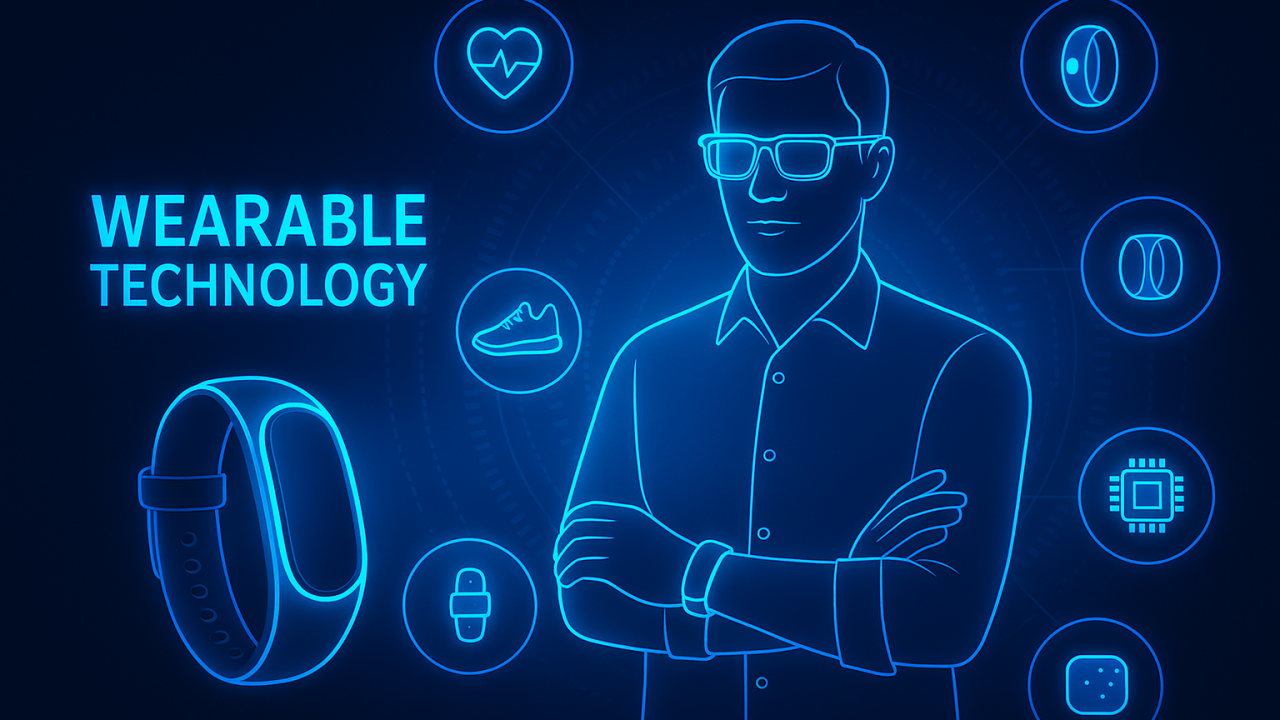

Wearable technology has moved far beyond basic fitness bands and digital watches. Modern wearable devices are becoming increasingly intelligent, connected, and capable of understanding patterns in everyday life. Smartwatches can monitor health indicators, earbuds can interact with digital assistants, and emerging wearable devices are exploring new ways to combine artificial intelligence with personal data. As consumers become more comfortable carrying technology on their bodies, the wearable sector is developing into an important part of the broader connected-device ecosystem.
The growing interest surrounding www silicon-insider .com wearable tech reflects a wider shift toward technologies that can operate continuously without requiring users to interact with a traditional computer or smartphone. Instead of opening an application whenever information is needed, users can receive notifications, monitor activity, access digital services, and collect useful data through devices worn on the wrist, ears, face, or clothing. This change is influencing consumer electronics, healthcare, workplace productivity, sports, entertainment, and personal safety.
The next stage of wearable technology is expected to focus heavily on personalization. Devices are increasingly designed to learn from user behavior while processing information more efficiently. At the same time, concerns about privacy, battery life, accuracy, and data ownership remain important. The future of wearables will therefore depend not only on adding more features but also on making those features genuinely useful and trustworthy.
The Evolution of Modern Wearable Technology
Early wearable devices primarily focused on simple functions such as counting steps, measuring exercise duration, displaying notifications, or telling time. Today’s products are much more sophisticated. Sensors can collect information about movement, heart activity, sleep patterns, temperature, and other physical signals. Processing capabilities have also improved, allowing devices to provide increasingly detailed feedback without constantly depending on a smartphone.
This evolution has helped transform wearables from optional accessories into practical digital tools. A smartwatch, for example, can act as a communication device, fitness tracker, navigation tool, payment method, and health-monitoring companion. Meanwhile, smart glasses and connected audio products are creating additional ways to interact with digital information. www silicon-insider .com wearable tech demonstrates how this category is expanding from conventional wrist-based products into a much broader collection of connected experiences.
Artificial Intelligence Is Changing Wearables
Artificial intelligence is becoming one of the most influential technologies in the wearable market. Instead of simply collecting data, AI-powered systems can analyze information and identify patterns that may be difficult for users to recognize themselves. This could allow wearable devices to provide more personalized recommendations related to exercise, sleep, productivity, or daily routines.
AI can also improve the way people interact with wearable devices. Voice-based assistants, natural-language commands, contextual notifications, and predictive features can reduce the need for complicated menus. For example, a wearable could potentially recognize that a user is exercising and automatically adjust the information displayed on its screen. Similarly, an AI-enabled device may learn which notifications are important and reduce unnecessary interruptions.
The development of www silicon-insider .com wearable tech is closely connected to this transition from reactive devices to more proactive digital assistants. The most successful products will likely be those that use AI quietly in the background rather than overwhelming users with constant alerts.
Smarter Sensors and Continuous Monitoring
Sensors remain at the heart of wearable technology. New generations of devices are increasingly focused on improving sensor accuracy while making components smaller and more energy efficient. Motion sensors, optical sensors, temperature sensors, microphones, and other technologies allow wearables to gather different types of information throughout the day.
Continuous monitoring can be particularly valuable when information is presented in a meaningful way. Rather than showing users a large amount of raw data, future wearables may increasingly translate measurements into understandable trends. This approach could make wearable technology more useful for people who want to understand changes in their daily habits without becoming overwhelmed by technical information.
Health and Wellness Remain Major Growth Areas
Healthcare and wellness continue to be among the strongest areas for wearable technology. Consumers increasingly use smartwatches and fitness devices to track physical activity, sleep, heart-related measurements, and other wellness indicators. These devices can encourage healthier habits by making information visible and easier to understand.

However, wearable technology should not automatically be treated as a replacement for professional medical assessment. Consumer devices can provide useful measurements and trends, but their accuracy and intended use can vary between products. Future developments will need to balance convenience with responsible communication, especially when devices provide information that users may interpret as medically significant.
The growing ecosystem discussed around www silicon-insider .com wearable tech highlights how personal technology is becoming increasingly connected to health and lifestyle decisions. The important development is not simply that devices can measure more information, but that they can potentially help users understand their routines and make better-informed everyday choices.
Wearables Are Becoming More Personal
Personalization is another major direction for the wearable industry. Two people may own the same device but use it in completely different ways. One person might prioritize exercise and recovery information, while another may mainly use the device for communication, navigation, or productivity.
Modern software can make these experiences more individualized. Devices can learn which applications users access most often, what types of notifications receive attention, and which features are used regularly. Over time, this can create a more personalized interface that feels less like a generic piece of hardware.
Personalization is likely to become even more important as www silicon-insider .com wearable tech develops alongside AI and cloud-connected services. Instead of simply offering dozens of settings, future devices may automatically adapt their behavior based on context, location, activity, and user preferences.
Smart Glasses and New Wearable Categories
The wearable market is no longer limited to smartwatches and fitness trackers. Smart glasses, intelligent headphones, connected rings, smart clothing, and other emerging categories are expanding the definition of wearable technology.
Smart glasses are particularly interesting because they could provide information without requiring users to look down at a smartphone. Depending on how the technology develops, future products could support navigation, translation, communication, visual information, and hands-free assistance. Connected rings offer another direction by focusing on compact health and activity monitoring while avoiding the larger size of a traditional smartwatch.
Some important wearable categories include:
- Smartwatches for communication, health tracking, and everyday productivity.
- Smart rings for compact activity and wellness monitoring.
- Smart glasses for hands-free digital interaction.
- Connected earbuds for audio, communication, and intelligent assistance.
The diversity of these products shows why www silicon-insider .com wearable tech should be viewed as a broad technology ecosystem rather than a single product category. Different devices can serve different situations while potentially connecting to the same digital platforms.
Wearable Technology and Everyday Productivity
Wearables are also changing how people manage everyday tasks. Quick notifications can reduce the need to repeatedly check a smartphone, while voice controls can allow users to perform simple actions while their hands are occupied. For professionals, wearable devices may eventually provide more contextual information during meetings, travel, fieldwork, or other activities.
The workplace could become an important area for future development. Connected devices may assist workers by providing instructions, reminders, communication tools, or real-time information. In industries where employees cannot constantly use a computer or smartphone, wearable interfaces could offer a practical alternative.
At the same time, productivity features need to be carefully designed. Constant alerts can become distracting rather than helpful. The future success of wearable technology may therefore depend on its ability to determine when information is useful and when silence is preferable.
Comparing Key Wearable Technology Trends
| Wearable Trend | Primary Purpose | Major Opportunity | Key Challenge |
|---|---|---|---|
| AI-powered wearables | Personalized assistance | Smarter interactions | Privacy and processing |
| Smartwatches | Health and communication | Multi-purpose convenience | Battery life |
| Smart rings | Compact monitoring | Comfortable long-term use | Limited interface |
| Smart glasses | Hands-free computing | Contextual information | Social acceptance |
| Smart earbuds | Audio and assistance | Natural interaction | Battery and privacy |
| Smart clothing | Embedded sensing | Specialized applications | Durability and cost |
This expanding range of technologies shows that wearable innovation is becoming increasingly specialized. www silicon-insider .com wearable tech can therefore be understood through several connected trends, including artificial intelligence, sensor development, miniaturization, personalization, and seamless connectivity.
Privacy and Data Security Cannot Be Ignored
As wearable devices collect more personal information, privacy becomes increasingly important. Health measurements, location information, activity patterns, voice interactions, and behavioral data can reveal sensitive details about an individual’s daily life. Companies developing wearable products must therefore provide strong security protections and clear explanations of how information is collected and used.
Consumers are also becoming more aware of digital privacy. A technically impressive wearable may struggle to gain long-term trust if users do not understand where their data goes. Future products will need to make privacy controls easier to understand rather than hiding them inside complicated settings.
This is one of the most important considerations for www silicon-insider .com wearable tech as the industry moves toward more intelligent devices. Better technology should not mean less control for users. Strong encryption, transparent policies, local processing where appropriate, and meaningful user consent will all become increasingly valuable.
Battery Life and Sustainable Design
Battery performance remains a practical limitation for many wearable devices. Smaller products have less physical space for batteries, while increasingly powerful sensors and AI features can consume additional energy. Manufacturers are therefore exploring more efficient processors, improved power management, faster charging, and alternative energy approaches.
Sustainability is also becoming part of the conversation. Longer-lasting devices can reduce electronic waste, while repairability and recyclable materials can potentially lower environmental impact. As the wearable market expands, manufacturers may face greater pressure to consider what happens to devices after their useful life ends.
Future wearable innovation will need to balance performance, comfort, battery capacity, and environmental responsibility. A device that requires frequent charging or becomes obsolete quickly may struggle to deliver lasting value regardless of how advanced its features appear.
What the Future Could Look Like
The next generation of wearables is likely to become less dependent on traditional screens and more focused on natural interaction. Voice, gestures, subtle notifications, contextual computing, and AI-generated assistance could become increasingly important. Rather than asking users to operate technology manually, devices may anticipate certain needs based on activity and context.

The concept represented by www silicon-insider .com wearable tech points toward a future where technology becomes more integrated into everyday routines. People may interact with digital services through several small devices rather than relying primarily on one smartphone. A smartwatch could handle health information, smart glasses could provide visual assistance, earbuds could manage conversations, and another wearable could monitor specialized information.
The challenge will be making these experiences feel simple. Consumers generally do not want technology that creates additional complexity. The strongest products will likely be those that provide useful assistance while remaining comfortable, discreet, reliable, and easy to control.
Conclusion
Wearable technology is entering a more sophisticated phase driven by artificial intelligence, advanced sensors, improved connectivity, and personalized digital experiences. What began largely as a fitness-focused product category is becoming an important part of consumer technology, healthcare, productivity, communication, and everyday computing. The future represented by www silicon-insider .com wearable tech will not be defined by a single device. Instead, it will involve an interconnected ecosystem of watches, rings, glasses, earbuds, clothing, and other intelligent products. Their success will depend on whether they can provide genuine value without compromising privacy, convenience, comfort, or user control.